Real Folly or Modern Garden Building? How to Tell the Difference
Half a mile from the nearest house, a brick tower stands in a hedge: one arched window, no door, a finial leaning like a tired man. Georgian eye-catcher, or a 1990s garden building in an unlucky spot? The question comes up more often than you might expect — in parish newsletters, on local history forums, and on walks when someone finally reads the map properly. Telling the two apart is mostly a matter of looking in the right order.
Start with the mortar
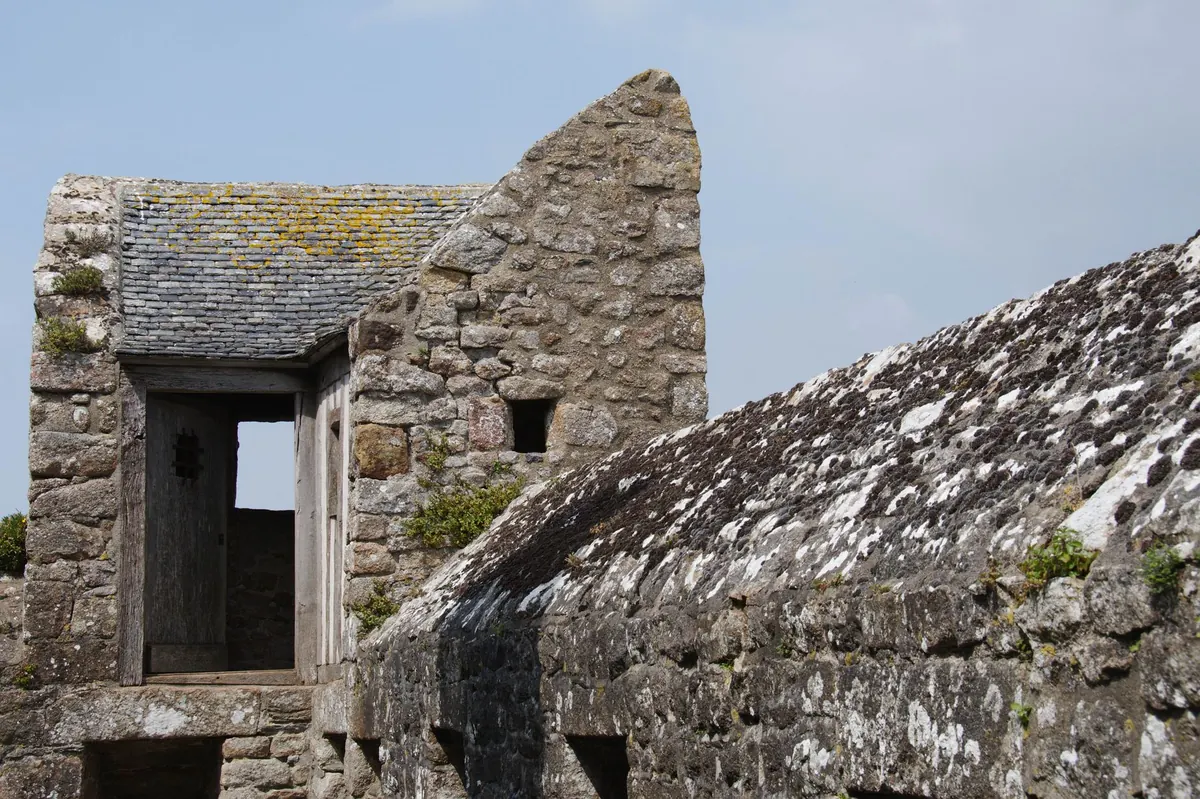
Joints are the biggest single tell, and most people walk straight past them. Historic follies were almost always built with lime mortar: soft, buff, grey or off-white, often quite crumbly, with wide joints and pointing that has weathered back to leave the brick or stone slightly proud. It crumbles under a fingernail.
Cement mortar behaves differently. It is hard, usually a flat grey, laid in thin ribbons, often standing proud of the face or finished with a strap or penny-struck pattern. Cement repointing is common on genuinely old walls, so its presence does not mean a building is modern — but it does mean someone has been at it. What is telling is a structure built entirely with hard cement and then smeared at the edges to look tired. Real decay is patchy. Manufactured decay is even.
Brick, stone and the traps they set
Bricks made by hand before the later nineteenth century vary. Slightly different sizes, colours that run from orange to purple to buff, softer faces, corners knocked back. The bricklayer compensated for irregularity by adjusting the mortar joints, so courses wander a little. Machine-made bricks are uniform, sharper and harder, and modern "aged" bricks are distressed across every face — which is not how wear works. Natural wear concentrates at the base, at corners, around doorways, wherever hands and barrows passed.
Stone is trickier. Rubble and coursed stone give little away, and one genuine trap is reused material: a Georgian folly built from stone taken off a dissolved monastery can look centuries older than it is. Look at the wall as a whole rather than individual stones, and ask whether the coursing looks designed or salvaged. Modern tumbled stone tends to have the same softness on every face, including the ones that were never exposed.
Weathering, and the things nobody fakes
Green algae will colonise a new wall within a season, so a slimy green tinge proves nothing. Lichens are different. Crusty grey, yellow and orange lichens take years, often decades, to establish, and a wall carrying several different types is usually old — though not automatically, since a folly can be old and a modern shed can sit in a damp, clean-air spot and stay bare for a long time.
Look at what has been worn, and where:
- Glass. Crown or cylinder glass is wavy, bubbly and faintly green, and thickens unevenly. Modern float glass is flat, colourless and uniform.
- Ironwork. Hand-wrought iron splits and laminates with rust. Modern cast iron from a catalogue is thin, regular and holds a coat of paint too neatly.
- Ground line. Historic walls meet the soil in an untidy way, with a shallow footing or none visible, moss, and a century of accumulated dirt. Modern bases show slab edges, gravel margins, membranes or a neat engineering-brick plinth.
- Plant scars. Ivy cut back and regrown repeatedly leaves a stubbled, knotted surface. A single dead climber on a new building leaves nothing.
- Repairs. Patchy brickwork, different mortars, lead flashing, iron tie bars and stone replacements all speak of a long life. A brand-new structure has none of this history.
The paper trail usually settles it
Archives win arguments. Work through these in roughly this order, and a picture generally emerges:
- Tithe maps and apportionments, which begin in the later 1830s and cover much of the country.
- Estate plans, enclosure awards and sale particulars, often held in the county record office.
- Ordnance Survey maps — the first editions of the 1840s onwards, then later revisions. A building present on the first edition predates that survey.
- The statutory lists: the National Heritage List for England, Cadw, and Historic Environment Scotland.
- Your county Historic Environment Record, which holds monument records far beyond listed buildings.
- Local histories, garden journals, old postcards and aerial photographs, including mid-twentieth-century survey flights.
A word of caution: absence from a map is not proof. Small structures were sometimes skipped, and a folly rebuilt on the same footprint can confuse a sequence of maps for a century.
Design gives it away too
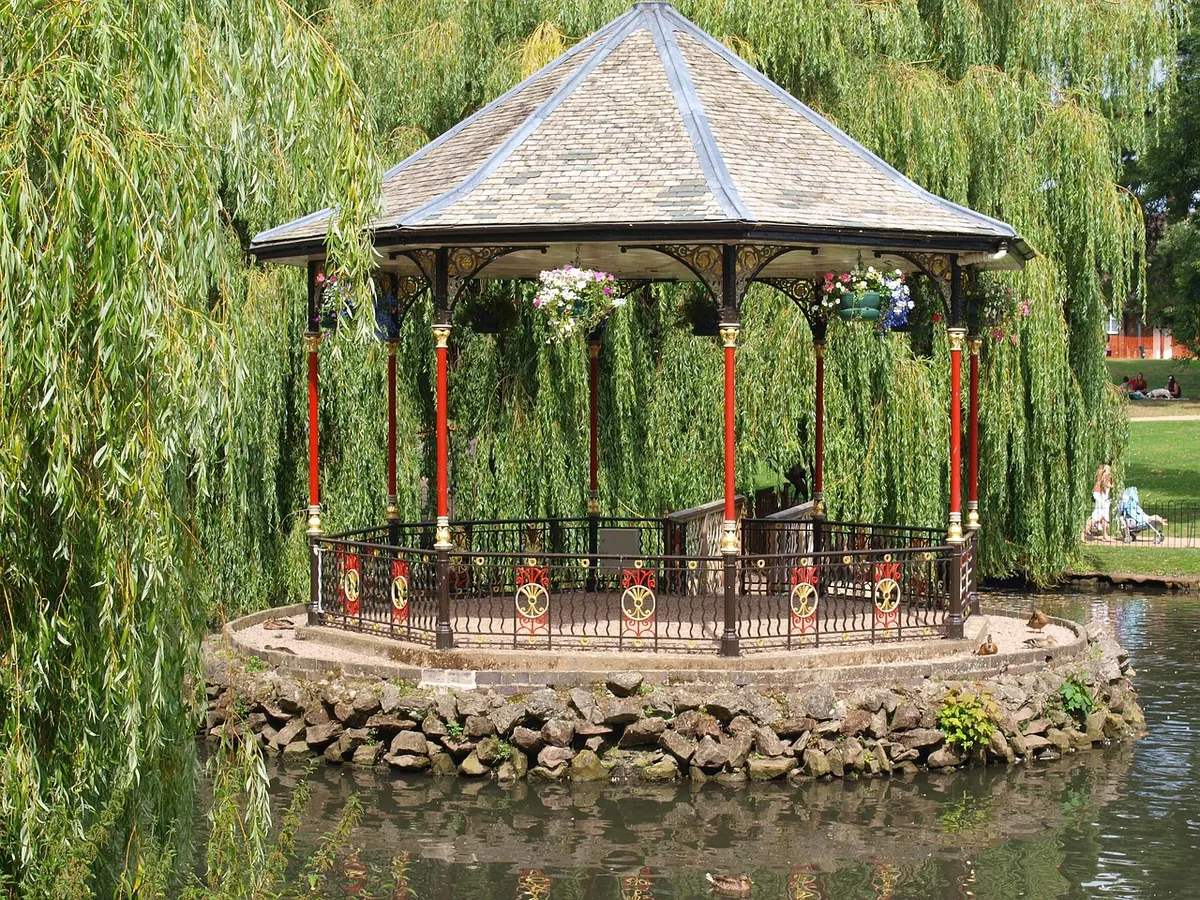
Follies are meant to be looked at rather than used, and that shows in the planning. Blind windows. Doors that open onto solid wall. Stairs too narrow for a person, or running up into a void. Turrets with no room inside, gun loops on a garden tower with no garrison. Sham ruins, deliberately built broken, with no fallen rubble — because nothing ever fell. Proportions are often slightly off: a tower too tall for its footprint, a little temple too cramped for any gathering. Reused fragments, such as a medieval window set into a brick wall, are another reliable sign of a building with a decorative purpose.
Modern garden buildings go the other way. They are engineered: level, plumb, symmetrical, weathertight, with doors that close and windows that open. Machine-sawn pressure-treated timber, uPVC, composite decking, powder-coated aluminium, stainless and zinc-plated screws, plastic plugs, sealed double-glazed units, hidden fixings and breathable membranes all point in one direction.
A ten-minute check on site
- Scrape a joint with a penknife. Lime is soft and dusty; cement is hard and resists.
- Look at how the wall meets the ground before you look at anything above it.
- Ask where the wear is. Concentrated at doorways and bases is natural; spread evenly across every face is not.
- Check the life on the wall — lichen variety, moss, a sapling with a visible trunk growing from a crevice.
- Get inside if you can. Soot, old lime plaster, a hearth, an iron bracket or a flue will tell you more than any external detail.
- Then check the map and the lists, and ask the record office.
Before you decide, and before you touch anything
Treat conclusions as provisional. Photograph what you find, with something for scale, and note the date, direction and grid reference; county Historic Environment Records welcome that sort of detail.
If you own the structure, resist the urge to repoint, render or strip vegetation until you have taken advice. Hard cement on old brick or soft stone can cause real damage, and if the building is listed or sits in a conservation area, works may need consent from the local planning authority — sometimes even repointing a garden wall. Conservation officers are generally glad to hear from people who ask first. If a folly forms part of a property you are buying, the listing description, title plan and a building surveyor's report will tell you more than any number of walks past, and anything touching ownership, boundaries or consent belongs with your solicitor.
Photo: Jean-Paul Wettstein / Pexels