Folly Visiting Etiquette: 12 Common Mistakes to Avoid
Follies are awkward places to visit, and that is part of their charm. They were built to be looked at rather than lived in, so they tend to sit on private land, at the end of a farm track, behind a hedge, or in a field where the only path is the one the sheep have worn. You rarely get a visitor centre, a car park and a helpful sign. You get a stile, a chained gate and a decision to make.
Most of those decisions are straightforward. A handful of habits will keep you right, and the mistakes below are the ones that cause the most trouble: annoying farmers, damaging fragile stonework, or simply making a good walk harder than it needs to be.
Don't assume a visible folly means open access
A tower on the Ordnance Survey map does not mean the land around it is public. Footpaths, bridleways and permitted routes are marked; everything else belongs to somebody. In England and Wales, trespass is generally a civil matter, which sounds harmless until a day out turns into an argument at a farm gate. Scotland's access rights are broader, but they come with responsibilities and do not extend to houses, gardens, or land where access is not being taken responsibly.
Some places are firmly out of bounds whatever the map says: railway land, military ranges and their warning signs, water treatment works, and anywhere a locked gate carries a clear notice. If a particular folly matters to you, look up the estate, the local history society or a parish council page before you set off, and ask yourself whether a view from the right of way is enough. Often it is. Where access genuinely matters, and especially if money, boundaries or an event are involved, take proper professional advice rather than a guess.
Gates, stiles and leaving things as you found them
A gate left swinging is the classic complaint. It lets sheep onto a road, cattle into a garden, or a herd into a field of young barley, and it takes one person ten seconds to prevent.
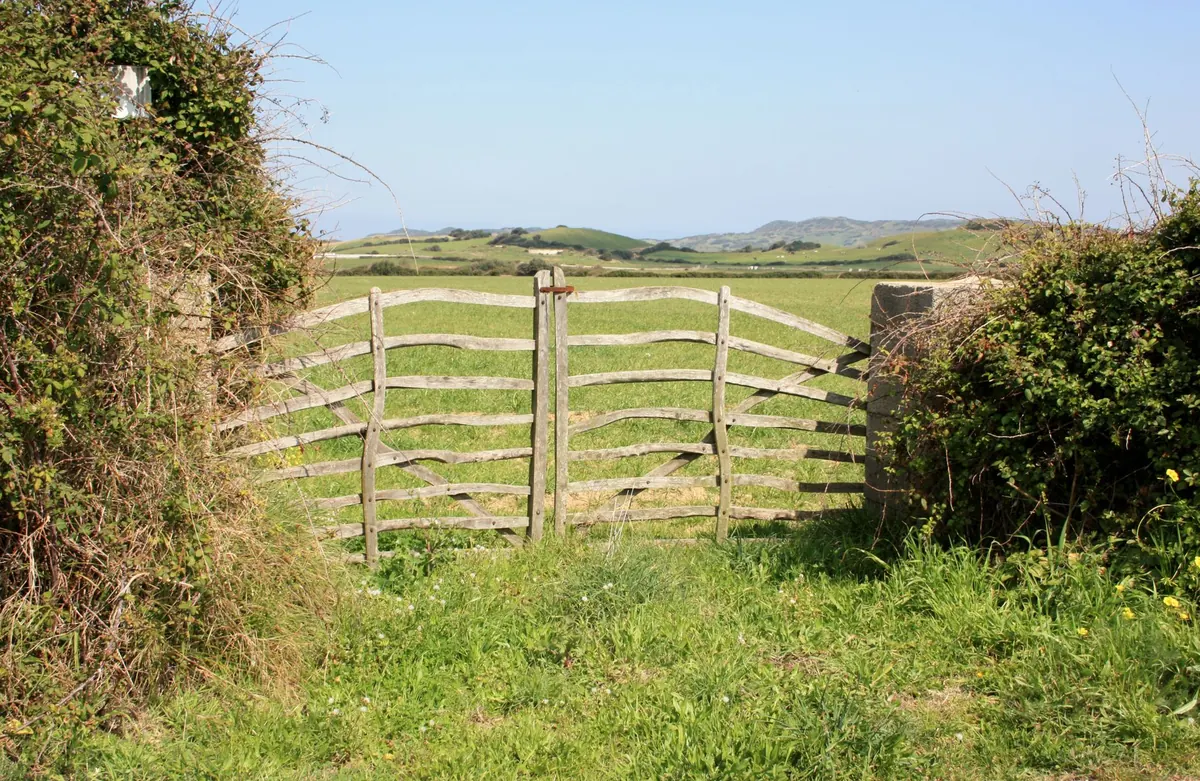
Handling a gate well
- Read the sign before you touch the catch. “Please close the gate” and “Please leave open” mean exactly what they say.
- If a gate is tied shut with twine or wire, undo it carefully and retie it the same way. Don't stretch a loop you cannot redo.
- Leave gates as you find them, but if you are unsure, close them. A closed gate is rarely the wrong answer.
- Use the stile or kissing gate beside a locked gate rather than climbing over the gate itself. Stone and wire take the damage; you take the risk.
- Check behind you as you walk away. A gate can look shut while resting on the catch.
- On bridleways, gates are wider for horses. Don't wedge them open with a stone.
Livestock, dogs and the field with no path
Cattle and horses are not scenery. Walk around the edge of a field rather than straight through the middle of a herd, give cows with calves at foot a wide berth, and never put yourself between a cow and her calf. Don't feed anything, don't stroke anything, and don't assume a field is empty of risk because the gate was open.
Dogs cause more trouble than anything else on this list. Keep them on a lead around livestock and, in spring and early summer, anywhere near ground-nesting birds. A dog loose in a lambing field is a serious problem for the farmer and a distressing one for you, and it can end badly for the dog.
If cattle come towards you while you have a dog with you, letting the dog off the lead is commonly advised, so that the cattle follow the dog rather than you. It goes against instinct, and only you can judge the moment. If a field feels wrong, take the long way round and enjoy the extra view.
Parking, lanes and gateways
Blocking a gateway is the parking equivalent of leaving a gate open. A field entrance that looks empty at ten in the morning may be needed by a tractor and trailer twenty minutes later. Leave enough room for farm machinery to swing in, and stay off verges that are soft after rain, because you will cut them up and may struggle to get out.
On single-track roads, passing places are for passing, not parking. Keep them clear, be ready to reverse, and give a wave when someone waits for you. In villages, use a car park or layby even if it means an extra ten minutes on foot; residents notice, and they remember.
Climbing, leaning and other damage
Follies are usually older and more fragile than they look. Many are listed buildings, and some are scheduled monuments, where causing damage can be a criminal offence. Loose coping stones, crumbling parapets and hollow-sounding masonry are hazards before they are temptations.
So: don't pull stones out to see what is behind them, don't sit on a ruin's edge for a photograph, and don't add to the graffiti that somebody else started. Keep fires well away from stonework and undergrowth, and don't fly a drone low over private gardens or livestock. Watch for wildlife as well. Folly tunnels and towers often shelter bats, and bat roosts are protected by law, so if you disturb one, back out quietly and leave it be.
Be a good guest in a small place
Most follies stand close to somebody's home or livelihood. Keep voices down in a hamlet, use headphones rather than a speaker, don't peer through windows, and take all litter home, including fruit peel and the corner of a sandwich wrapper. Stick to the path across a crop and close the gate you came through. If you are planning to arrive as a group of twenty with a minibus, ask first; a phone call to the estate office costs nothing and usually gets a friendly answer.
The twelve mistakes at a glance
- Treating a folly on a map as a public attraction rather than private land.
- Ignoring locked gates, “no public access” notices, railway land and military ranges.
- Leaving a gate swinging, or retying it differently from how you found it.
- Climbing over a locked gate, wall or fence instead of using the stile.
- Walking straight through a herd with a dog off the lead.
- Feeding, stroking or crowding livestock, especially cows with calves.
- Parking in a gateway, on a soft verge or in a passing place.
- Blocking a village lane when there is a car park nearby.
- Climbing on, sitting on or pulling stones from fragile masonry.
- Litter, fires and graffiti left behind.
- Noise, speakers and drones in a quiet place.
- Setting off without checking the route, the weather, the ground underfoot or the daylight left.
None of this is about asking permission to enjoy yourself. Check the access before you go, park considerately, shut what you open, keep the dog close and your hands off the stonework, and you will be welcome back. Follies have survived a few centuries of weather and fashion. A little care from visitors is what keeps the gates open and the paths walked.